
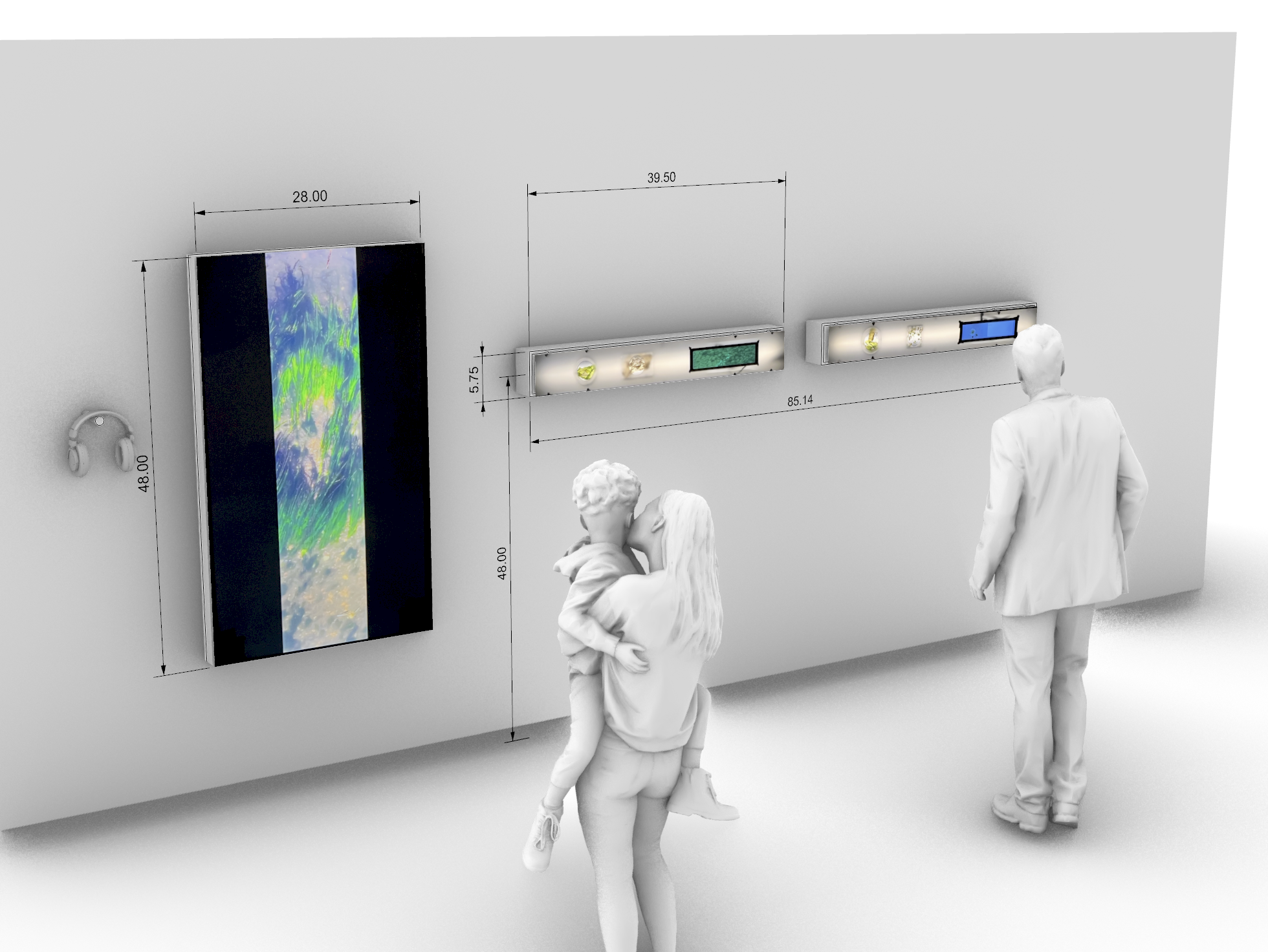
Presentations:
Oscillations, Centre culturel canadien, Paris. (curated by Catherine Bédard, Samuel Bianchini, Marie-Pier Boucher, Alice Jarry) October 16th, 2025 – January 16th, 2026 Collaborative work with Omar Shabbar and Kieran Maraj
Afterglow Exhibition, Gales Gallery, Toronto Feb 2025. (curated by Nina Czegledy and Joel Ong)
Memory machines is an ongoing archival project exploring the entanglement of historical narratives and the physical storage devices within which these exist, age and percolate. The 2nd iteration in this series, Memory Machines #2 : Ocean Memory (2025) focuses on the creative and poetic ways coastal environments become portals for memory and the way earthbodies (humans and more-than-human bodies) become implicated as inscription devices within them.
While searching for ‘kelp’ in the Oceans 3.0 data portal (ONC, UVic) we uncovered a bunch of videos that show underwater, deep sea machines in the act of maintenance, such as supporting camera structures and replacing small components. Alluding to the dual valence of ‘performance’ (Tarsh Bates) as both choreography and evaluation of a living system, these machines are cast as performers in the act of sustaining the affordances of our visuality/knowledge of the deep sea. As outliers to data portraits of the ocean, they correspond to the 0’s in data sets – moments when machines are malfunctioning or turned off, and remain (doubly) invisible to our eyes.
This project features an array of experimental research-creation processes.
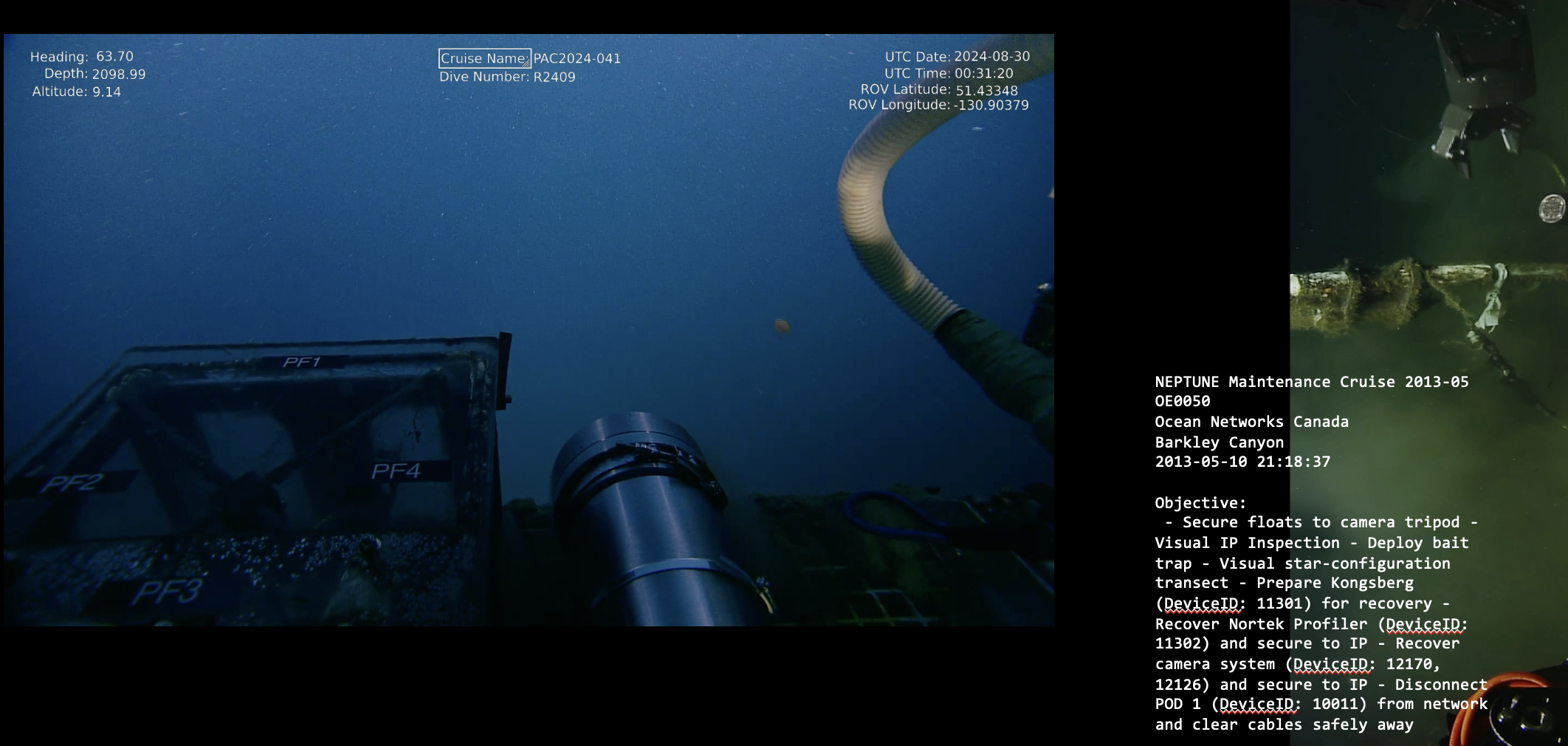
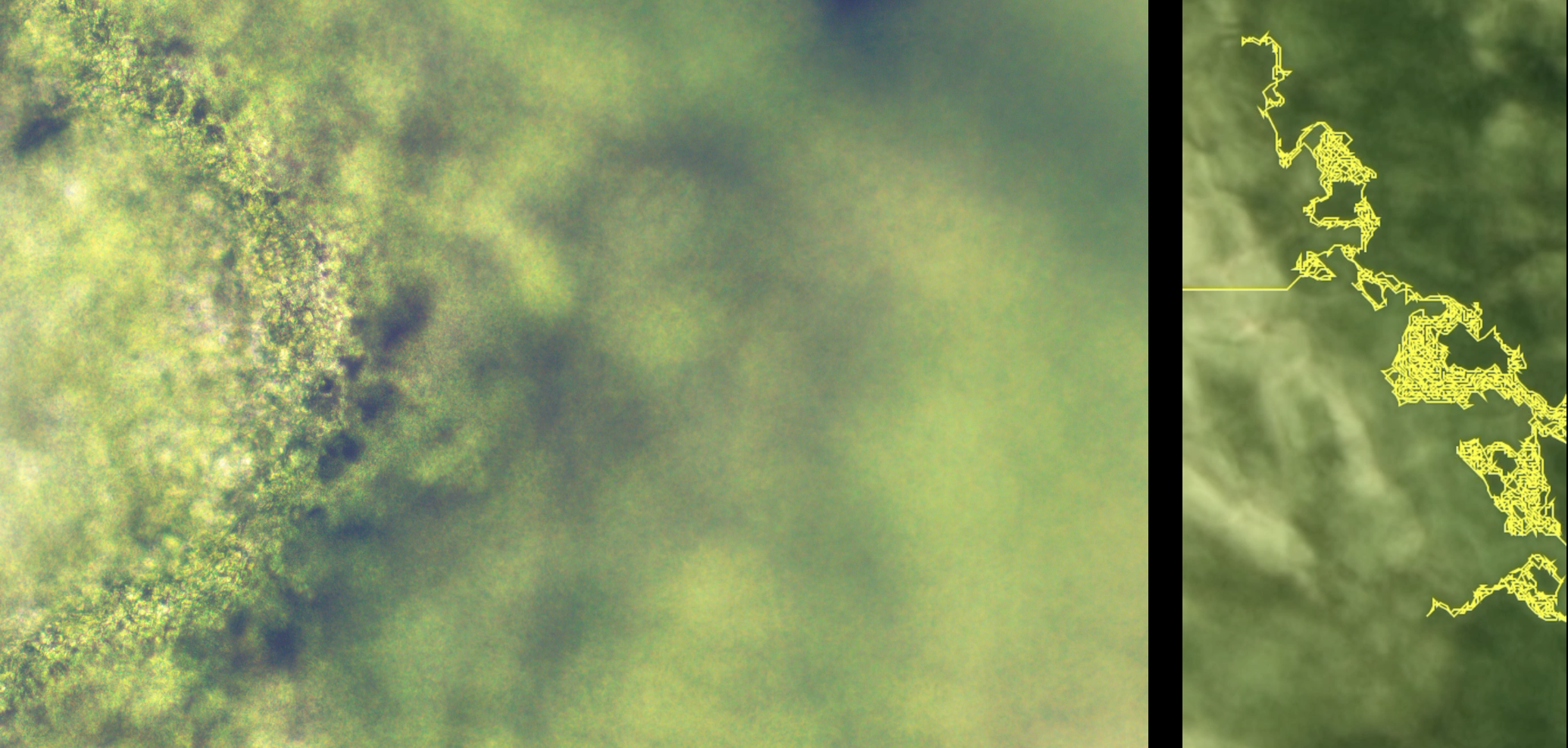
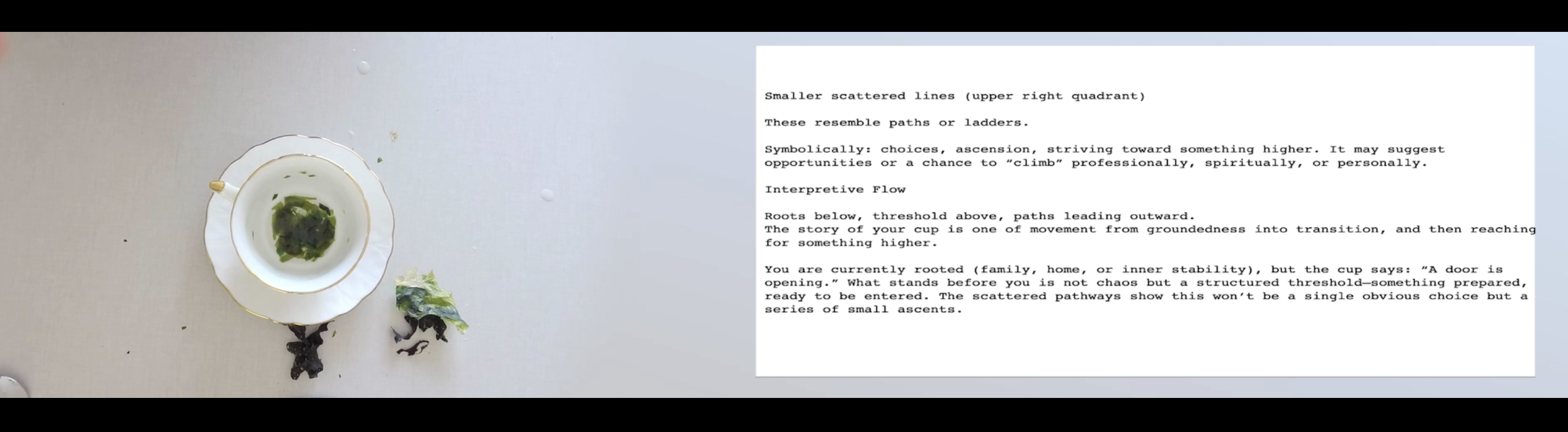
For the Oscillations show in 2025, the project featured a video in 3 études –
1. Serendipitous accounts of deep-sea machines that facilitate contemporary knowledge of the oceans undergoing processes of vital maintenance are cast as performers in a sub-marine theatre
2. sea kelp, a common occurrence on the beach that in its washed-up, dried out form is often an outlier in data portraits of interstitial shoreline ecologies is analyzed at a micro level, and its creases traced with a computational inscription
3. kelp-tea brewing and divination as an experiment in unravelling alternative forms of communication.
Collectively, the project is an entry point for us to continue engaging with the rich and contested notions of the coast and an invitation to consider together aesthetic entry points to these broader conversations.
For the Afterglow exhibition, Ocean Memory focused on experiments in bio- and chemo- luminescence inspired by light as a mode of interspecies communication in the deep sea. Our research involved the dinoflagellate Pyrocystis fusiformis and a deep dive into physical activation of bioluminescence in vitro through a robotic arm that was programmed to simulate wave currents. The presented experiment simulates their bioluminescence through backlit particles in a Petri dish of high-density liquid that reminisces waves. This prototype has guided further experimentation in ‘seeing’ through more-than-human languages, proposing ways this animacy can encode intent, store, and variably reveal affect for organisms at microscopic scale.


WORK-IN-PROGRESS (estimated completion : April 2026)
memory machines #3: an oceanic pas de deux

In this third iteration an oceanic pas de deux, a collage of videos on a projection wall show underwater, deep sea machines in the act of maintenance, such as supporting camera structures and replacing parts, or diving in and out of the water as part of their operational modes (Oceans 3.0 data portal). Nearby, a pair of robotic arms are robotic arms are trained to mimic their activities through a pose estimation workflow re-configured for non-humans and together construct, deform and collaboratively rework a virtual mesh of ocean currents, particle systems of blue swirls that move between them. This colorful interplay – a duet or pas de deux references pioneering animation artist Norman McLaren’s work of the same title where traces of two dancers are computationally generated and articulate the refrains/echoes of their movement. Alluding to the dual valence of ‘performance’ as both choreography and evaluation of a living system, Memory Machines #3: an oceanic pas de deux casts these machines as invisible performers in the act of sustaining the affordances of our visuality/knowledge of the deep sea. Returning them to the visibility on the surface, the robotic arms and video wall offer a revelatory potential within the space of the gallery.